
Many businesses upgrade internet service to get faster speeds. Providers advertise multi gigabit connections. The expectation is simple. Faster internet should improve performance.
That is not always what happens.
Internet speed is only one part of network performance. Your internal hardware often sets the real limit. If your network cannot handle higher throughput, you will not see the gains you expect.
Why Faster Internet Does Not Always Mean Faster Performance
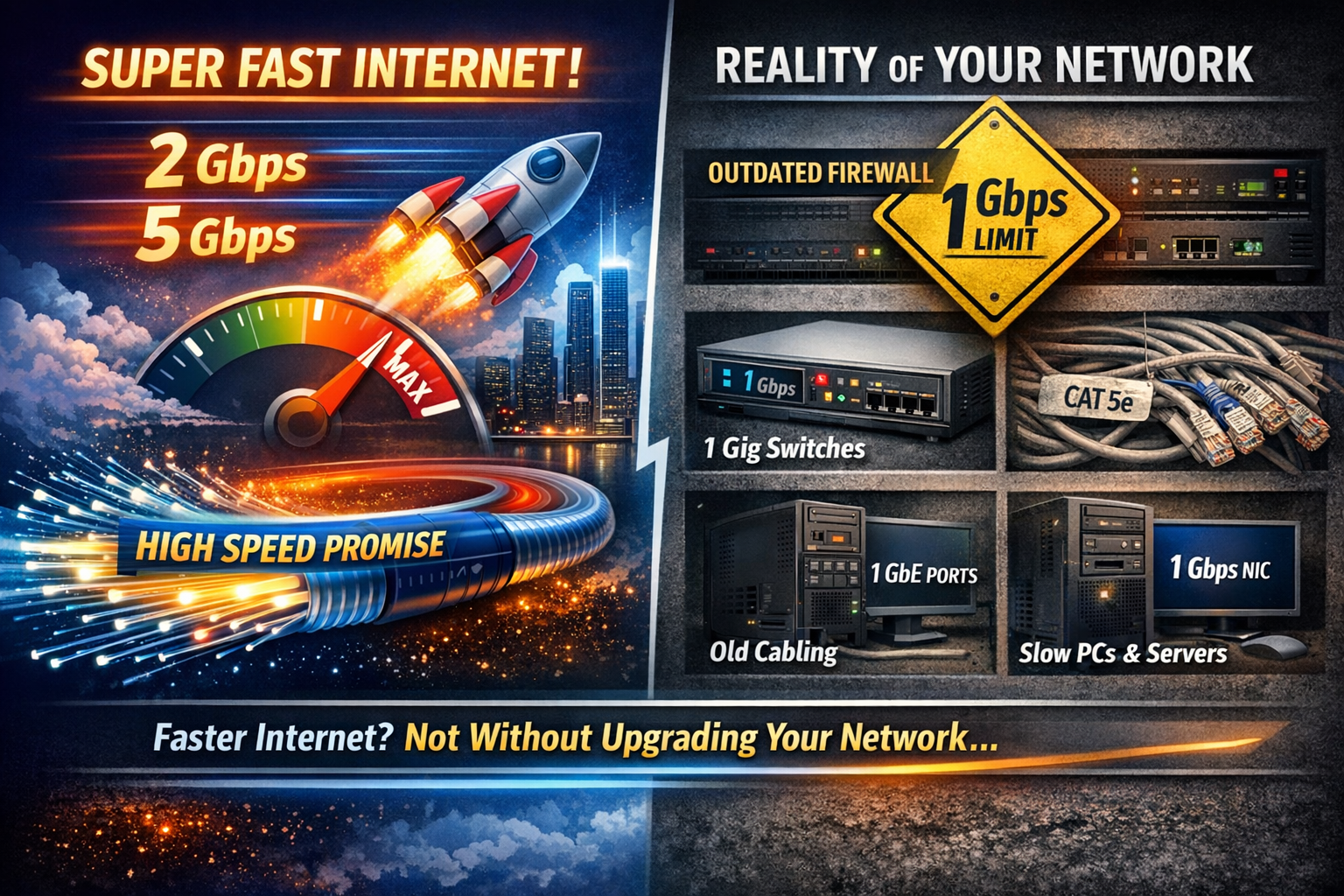
Most business networks still run on 1 gigabit infrastructure. This creates a hard ceiling. Even if your provider delivers 2Gb or 5Gb service, your users may still experience 1Gb speeds or less.
For reference on broadband speed standards, see Federal Communications Commission guidelines on broadband performance and deployment.
Common Bottlenecks Inside Business Networks
Firewall or Router
This is the first checkpoint in your network. Many business firewalls are rated for 1Gb throughput. They cannot process higher WAN speeds without an upgrade.
Learn how to evaluate your edge security in your firewall and network security guide: https://southridgetech.com/firewall-network-security
Network Switches
Switches control traffic between devices. Most small and mid size businesses use switches with 1Gb ports. This limits all internal traffic, regardless of internet speed.
See best practices for business networking: https://southridgetech.com/business-networking-solutions
Workstations and Servers
Most devices include 1Gb network interface cards. These NICs cap the speed each device can use. Faster internet will not bypass this limit.
Intel provides a useful overview of NIC capabilities and speeds: https://www.intel.com/content/www/us/en/products/network-io/ethernet.html
Cabling and Network Design
Older cabling may not support higher speeds. Poor network design can also reduce performance. Both must support multi gigabit throughput.
Learn more about structured cabling standards from TIA: https://www.tiaonline.org
When 1Gb Networking Is Enough
For most businesses, 1Gb still performs well. It supports:
- Cloud applications
- Email systems
- File sharing
- Video conferencing
For guidance on optimizing Microsoft 365 performance over typical business networks, review recommendations from Microsoft: https://learn.microsoft.com/microsoft-365/enterprise/network-planning-and-performance
Many companies will not see a noticeable difference beyond this level unless they have high data demands.
When Multi Gigabit Makes Sense
Higher speeds help in specific cases:
- Large file transfers
- Backup and replication systems
- High density office environments
- Media production or data heavy workflows
If your business fits these categories, explore upgrade planning services: https://southridgetech.com/it-consulting-services
How to Plan an Internet Upgrade the Right Way
Before upgrading your service, review your entire network. Focus on these steps:
- Check firewall throughput limits
- Review switch port speeds
- Confirm NIC capabilities on key devices
- Inspect cabling standards
- Evaluate actual bandwidth usage
You can request a professional network assessment here: https://southridgetech.com/contact
Key Takeaway
- Upgrading internet without upgrading infrastructure can create a speed trap. You pay for bandwidth you cannot use.
- Plan first. Upgrade where needed. Then increase your internet speed.
- If you want a clear answer on whether your network is ready, schedule a review with https://southridgetech.com
- This approach ensures your investment delivers real performance gains.